High Prolactin Levels: Symptoms, Causes and Treatment Options

Prolactin is best known as the hormone that allows breastfeeding, but it influences far more than milk production. When levels run too high outside pregnancy, a condition called hyperprolactinaemia, it can disrupt periods, fertility, sex drive, bone strength and mood in both women and men. Because symptoms are easy to blame on stress or ageing, many people live with the problem for years before it is diagnosed. The encouraging news is that high prolactin is usually very treatable, most often with a tablet taken once or twice a week. This guide explains what prolactin does, the causes and symptoms of high levels, how doctors diagnose the problem, how dopamine agonist medicines such as cabergoline work, and what they mean for fertility and everyday life.
What Is Prolactin and What Does It Do?
Prolactin is made by the pituitary gland, a pea-sized structure at the base of the brain. Its release is controlled mainly by dopamine, which acts as a brake. When dopamine signals fall or the pituitary produces too much hormone, prolactin rises. In pregnancy and breastfeeding this is normal and necessary. Outside those situations, high prolactin suppresses the hormones that drive the menstrual cycle in women and testosterone production in men, which explains many of the symptoms.
Symptoms of High Prolactin
In women
- Irregular, infrequent or absent periods
- Milk-like discharge from the breasts (galactorrhoea) when not pregnant or breastfeeding
- Difficulty conceiving
- Reduced sex drive and vaginal dryness
- Acne, excess hair growth or hot flushes in some cases
In men
- Low sex drive and erectile dysfunction
- Infertility and low sperm counts
- Enlarged breast tissue (gynaecomastia), and occasionally milk discharge
- Fatigue, reduced muscle mass and low mood
Symptoms related to a pituitary tumour
Larger tumours can press on nearby structures, causing headaches and loss of peripheral vision. These need urgent assessment.
Causes of High Prolactin
- Prolactinoma: a benign pituitary tumour and the most common functioning pituitary tumour. Small ones (microprolactinomas, under 1 cm) are far more common than large ones (macroprolactinomas).
- Medicines: antipsychotics (especially risperidone and amisulpride), metoclopramide, domperidone, some antidepressants, certain blood pressure medicines such as verapamil, opioids and oestrogen-containing products.
- Underactive thyroid: low thyroid hormone raises prolactin-stimulating signals.
- Pregnancy and breastfeeding: a normal, expected cause.
- Kidney or liver disease: reduced clearance of the hormone.
- Stress, intense exercise, sleep disruption and nipple stimulation: usually cause mild, short-lived rises.
- Macroprolactin: a harmless, large complex of prolactin that shows up on some blood tests without causing symptoms.
How High Prolactin Is Diagnosed
Diagnosis begins with a careful history of symptoms, periods, medicines and pregnancy possibility. A blood test is repeated to confirm a high result, ideally taken in the morning without recent exercise, breast stimulation or heavy stress, because these can temporarily increase levels. Doctors will usually check thyroid function, kidney function and sometimes a pregnancy test. Where levels are significantly raised, or a tumour is suspected, an MRI of the pituitary gland is performed, and larger tumours also require a visual field check. The prolactin level often gives a clue: values above about 150 to 200 ng/mL commonly point to a prolactinoma, whereas mild elevations are more often caused by medicines or other conditions.
How Dopamine Agonists Work
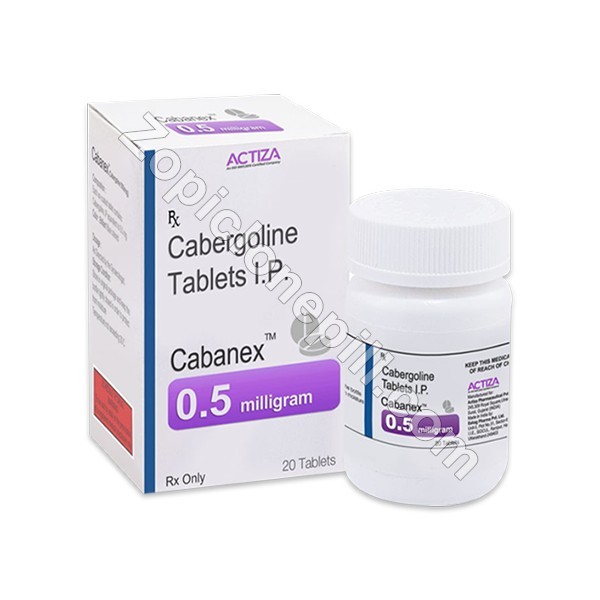
Dopamine agonists mimic the action of dopamine on the pituitary, switching off excess prolactin release and, in people with prolactinomas, shrinking the tumour. Cabergoline is usually preferred because it is more effective, works with once- or twice-weekly dosing and is better tolerated than bromocriptine, which is taken daily. You can view product details on our Cabergoline 0.5 mg page. Prolactin levels typically normalise within weeks to a few months, periods and fertility often return within a few cycles and tumours frequently shrink significantly.
Cabergoline vs Bromocriptine at a Glance
| Feature | Cabergoline | Bromocriptine |
|---|---|---|
| Dosing | Once or twice weekly | Once to three times daily |
| Effectiveness | Higher rates of normalising prolactin | Effective, but slightly lower |
| Tolerability | Generally better, less nausea | More nausea and dizziness |
| Pregnancy experience | Reassuring data, but usually stopped once pregnancy is confirmed | Longest safety record, sometimes preferred when planning pregnancy |
Side Effects and Safety
- Common: nausea, headache, dizziness, light-headedness on standing, tiredness and constipation. Starting with a low dose, taking tablets at bedtime and with food usually helps.
- Mood and behaviour: rarely, dopamine agonists cause impulse-control problems such as compulsive gambling, shopping, eating or hypersexuality. Tell your doctor immediately if you or your family notice behaviour changes.
- Heart valves: very high doses used in Parkinson’s disease have been linked to heart valve thickening. At the low doses used for prolactin this risk appears small, but doctors may arrange an echocardiogram if you take higher doses or treat for many years.
- Blood pressure: may drop when you start, so rise slowly from lying or sitting.
- Interactions: avoid combining with macrolide antibiotics without advice, and be cautious with medicines that lower blood pressure or block dopamine such as antipsychotics.
Fertility, Ovulation and Pregnancy
High prolactin is a common reversible cause of infertility. Once levels fall, ovulation returns in most women and testosterone and sperm production recover in most men. If pregnancy occurs, cabergoline is usually stopped once pregnancy is confirmed for women with small tumours, because the risk of tumour growth is low and monitoring is straightforward. Women with large tumours are followed more closely, and a specialist will advise on whether treatment continues or visual fields need checking.
Some couples also need fertility treatment such as ovulation induction or IVF. In these cycles, injectable human chorionic gonadotropin (hCG) is used to trigger the final release of an egg, and a dose is timed very precisely by a fertility specialist. Our store lists hCG 1500 IU and hCG 5000 IU for use only under fertility clinic supervision. These are not weight-loss or bodybuilding products, and misuse can cause serious harm, including ovarian hyperstimulation in women.
Long-Term Treatment and Stopping
Many people stay on treatment for at least two years. If prolactin levels are normal and an MRI shows no visible tumour or only a significant reduction, doctors may suggest a trial of stopping, with regular follow-up because the condition can return. Never stop on your own, because symptoms and tumour growth can recur.
Sleep, Stress and Hormone Balance
Prolactin is released in pulses during sleep, with levels peaking in the early morning hours. Poor or fragmented sleep, shift work and chronic stress can alter hormone rhythms, and in turn hormone imbalance can cause fatigue and low mood. Read how hormones impact women’s sleep at every stage of life, causes of insomnia in females and why sleep is important for your health and happiness. For mood and stress, see 7 ways to reduce anxiety and the link between depression and daytime sleep.
Frequently Asked Questions
Can high prolactin go away on its own?
If caused by stress, a medicine, or thyroid disease, yes. Prolactinomas usually need treatment, although some small tumours are simply monitored when symptoms are mild.
Can I breastfeed while taking cabergoline?
No. Cabergoline suppresses lactation and is not recommended while breastfeeding.
Will treatment affect my periods straight away?
Many women notice periods returning within a few weeks to months of levels normalising.
Is a prolactinoma cancer?
No. Prolactinomas are almost always benign, and malignant forms are extremely rare.
How often are blood tests needed?
Typically every few weeks while the dose is adjusted, then every six to twelve months once stable.
Why Long-Term High Prolactin Matters for Bone and Heart Health
Because high prolactin suppresses oestrogen in women and testosterone in men, it can quietly reduce bone density over time. Low sex hormones are a recognised cause of osteopenia and osteoporosis, and women who have gone months or years without periods are particularly at risk. Treating the underlying cause usually allows bone density to stabilise or improve, and your doctor may arrange a bone density (DEXA) scan if prolactin has been high for a long time. Maintaining calcium and vitamin D intake, regular weight-bearing exercise, not smoking and limiting alcohol all support bone strength alongside treatment.
When a Medicine Is the Cause
If a medicine is responsible, the approach depends on how important that medicine is. Never stop an antipsychotic, antidepressant or other prescribed medicine on your own, because stopping suddenly can cause relapse or withdrawal. Your doctor may lower the dose, switch to a prolactin-sparing alternative, such as aripiprazole in place of risperidone, or add a small dose of a dopamine agonist under specialist supervision. Blood tests are repeated after any change to confirm that levels are falling.
Living With a Prolactinoma: Practical Tips
- Take your tablet at the same time each week and set a reminder. Weekly or twice-weekly dosing is easy to forget.
- Start low and go slow. Taking the first doses at bedtime with a snack reduces nausea and dizziness.
- Keep a symptom diary. Record periods, headaches, vision changes and mood so your doctor can see progress.
- Attend follow-up appointments. Blood tests, MRI scans and visual field tests are how treatment is adjusted safely.
- Avoid unnecessary breast stimulation and strenuous exercise just before blood tests, which can falsely raise results.
- Do not buy tablets without prescription advice. The dose, the monitoring plan and the duration must be individualised.
Tests You Might Have
| Test | Why it is done |
|---|---|
| Repeat fasting prolactin | Confirms a persistent rise and excludes a stress-related spike |
| Pregnancy test | Rules out the most common normal cause in women of childbearing age |
| Thyroid function (TSH, free T4) | Hypothyroidism can raise prolactin |
| Kidney and liver function | Reduced clearance can raise levels |
| Other pituitary hormones | Assesses whether a larger tumour is affecting the gland |
| Pituitary MRI | Identifies a tumour and measures its size |
| Visual field testing | Checks for pressure on the optic pathways in larger tumours |
| Macroprolactin screening | Detects a harmless lab artefact in people without symptoms |
Common Myths About High Prolactin
- “It only affects women.” Men develop high prolactin too, and diagnosis is often delayed because symptoms such as low libido are not discussed.
- “A pituitary tumour always means surgery.” Medicine works for the large majority of prolactinomas, and surgery is a second-line option.
- “If periods return, I can stop the tablets.” Stopping early can allow levels to rise again, so decisions should follow repeat tests.
- “It means I can never get pregnant.” High prolactin is one of the most treatable causes of infertility.
- “Stress is always to blame.” Stress can raise prolactin mildly, but persistent high levels need investigation.
Questions to Ask Your Doctor
- Could any of my current medicines be raising my prolactin?
- Do I need a pituitary MRI, and what size is the finding?
- Which tablet and starting dose do you recommend, and how will we monitor it?
- If I am planning pregnancy, when should I stop treatment?
- How long will I need to stay on treatment, and what are the signs the condition is returning?
Emotional and Sexual Health
Low libido, fatigue and irregular periods affect self-esteem and relationships, and many people hesitate to raise these topics. If you are struggling, say so. Treating the hormone problem often improves desire, energy and mood within months, and counselling or sex therapy can help while that happens. Partners benefit from understanding that these symptoms have a medical cause and are not a reflection of attraction or effort.
Final Thoughts
High prolactin is a common, treatable hormonal cause of period problems, infertility, low libido and fatigue. Prompt diagnosis, an MRI where indicated and treatment with a dopamine agonist usually restores normal hormone balance. If you have unexplained symptoms, do not wait. See your doctor and ask about a prolactin blood test.
Disclaimer: This article is for general information only and is not medical advice. Always consult a doctor or pharmacist before taking any medicine.